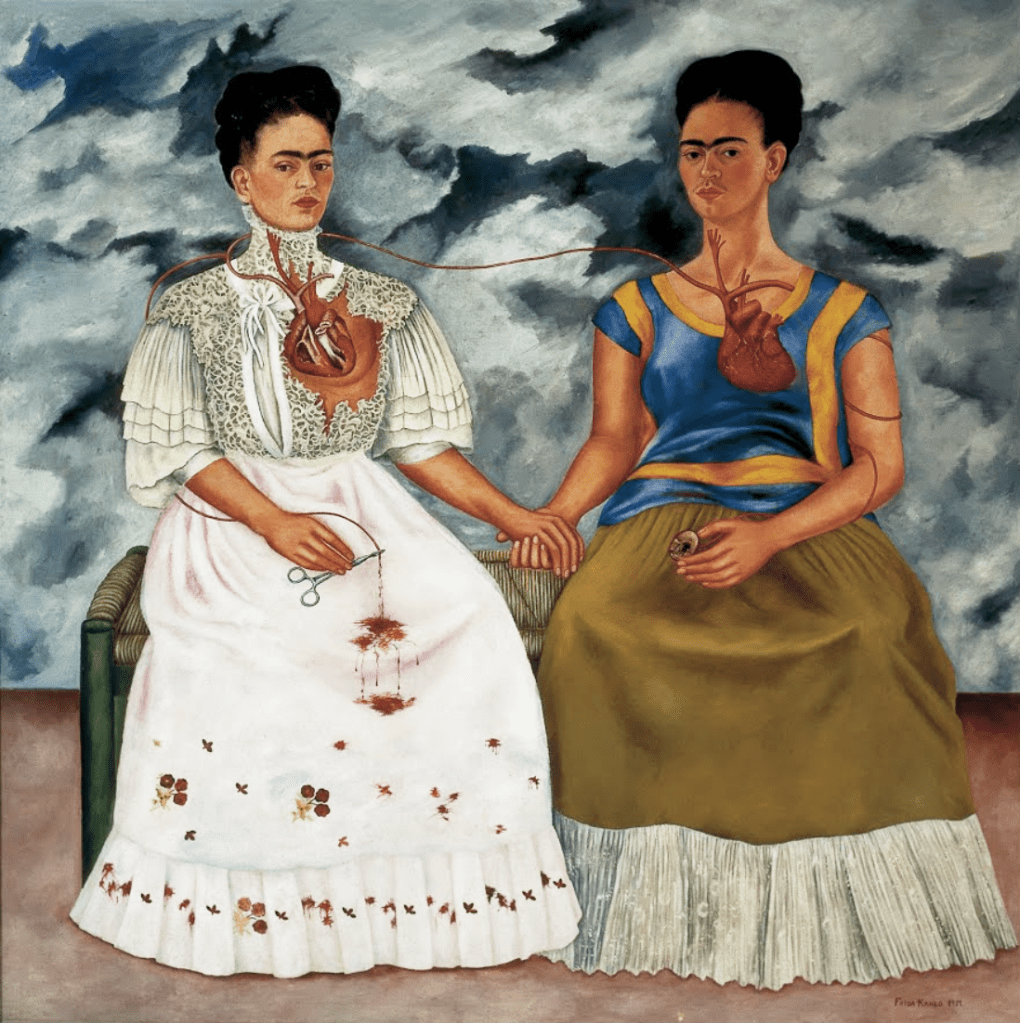
In the study of ecology, we often look at how energy is transferred through a system. When a primary path is blocked, that energy doesn’t simply vanish; it seeks the path of least resistance, often disrupting delicate sub-environments in the process. Lately, I’ve been observing a similar, more painful phenomenon in our social ecosystems: the displacement of cis female grief and resentment, and the specific ways trans men are forced to ground that lightning.
There is a profound, often unspoken tension that arises when trans men enter or remain in spaces traditionally shared with cis women. We are frequently met with a brand of lateral violence that feels both deeply personal and entirely impersonal at the same time. It is the weight of a debt we did not accrue, being collected by people who have no one else to charge.
The Safe Lightning Rod
The reality is that many cis women carry a lifetime of valid, bone-deep anger toward the cis men in their lives: the deadbeat fathers who vanished, the toxic ex boyfriends who left scars, and a patriarchal structure that rarely offers true accountability. Example: The current president of the United States. However, confronting those specific men is often dangerous, futile, or impossible. You cannot demand an apology from a ghost, and you cannot safely vent rage at someone who is committed to misunderstanding you.
Enter the trans man. Because of our shared histories, our proximity in queer or feminist circles, and an often accurate assumption that we possess a higher degree of emotional literacy or accountability, we become the safe target. We are accessible. We are often willing to listen. And because we are men, we are transformed into a convenient proxy for every man who wasn’t there to answer for himself.
The Essentialist Trap
This dynamic relies on a cruel paradox. In moments of peace, we are often treated with a degree of otherness, as if our experiences as trans people somehow make us men lite. But the moment a cis woman’s trauma is triggered by the ghost of a past relationship or a familial wound, that nuance evaporates. Suddenly, we are the quintessential Man.
We are expected to bear the brunt of the cis man’s sins. We are yelled at for the ways men take up space, the ways men silence others, and the ways men abandon their responsibilities. This happens not because we are doing those things, but because we are the only men in the room who will actually stay to hear the critique. It is a displacement of justice; a projection where the trans man becomes the punching bag for a trauma he didn’t cause and a person he doesn’t even know.
The Cost of the Proxy
Living as a surrogate for someone else’s shitty ex or deadbeat dad is an exhausting way to exist. It forces trans men into a position of permanent emotional labor, where we must navigate our own transitions while simultaneously cushioning the world from the fallout of other men’s behavior. We find ourselves apologizing for behaviors we’ve never exhibited and being held to a standard of atonement for a class of people that often doesn’t even claim us.
True progress in our social ecosystems requires that we address harm at its source. When we allow resentment to be offloaded onto the most accessible target rather than the most responsible one, we aren’t achieving healing; we’re just perpetuating a cycle of displacement.
As a naturalist, I know that you cannot stabilize an environment by taxing the wrong species. As a man, I know that my presence in a room shouldn’t have to serve as a sponge for a history that belongs to someone else. We owe it to ourselves, and to the health of our communities, to stop treating trans men as the safe version of the men who actually caused the hurt. It’s time to let the lightning find its own ground.
The Burden of the Container
There is a sharp irony in this displacement: trans men have our own complicated, often painful histories with cis men too. We are not exempt from the scars of the patriarchy; we have navigated them from multiple vantage points. Yet, there is a persistent expectation for us to act as an emotional container for our cis partners. I have known my wife since we were sixteen years old, back when we were baby lesbians, and we have navigated thirteen years of life together. It is a long, shared geography. But as time goes by, I notice a selective amnesia in the people we love. Because I am post-transition, nine years post-op from phalloplasty, she sometimes forgets the specific textures of my history. I never forget hers. There is a term for this called malgendering, where the nuances of a trans person’s past and identity are flattened or ignored to fit a more convenient, cis-centric narrative. I am expected to hold the space for her past while my own history is treated as a closed chapter.
The Myth of the Exile
Perhaps the most painful displacement of all is the weaponized grief of parents. I am often told that my transition “killed” the little girl they once knew, as if my existence is a funeral for their memories. To them, my transition is an exile, a violent expulsion of the female parts of myself to make room for the man I’ve become. But that is not my experience at all. She is not gone; she is still with me, woven into the very fabric of my adulthood.
The irony of this “death” narrative is that it ignores my own biological reality. The point of my transition was never to kill or exile those parts of myself, and I have the physical evidence to prove it. I still have my ovaries. I still carry the organs that represent that history within my own skin. These are not vestigial remnants of a “dead” person; they are living, functioning parts of the man I am today.
To suggest I have killed that girl is to deny the continuity of my own life. I did not trade one soul for another; I simply allowed the ecosystem to mature. My history is not a graveyard, and my body is not a site of erasure. I am a living testimony to the fact that you can honor where you came from without being imprisoned by it. My parents may be grieving a ghost, but I am here, fully alive and entirely whole.
The Myth of Point A to Point B
The common assumption is that the goal of transition is total assimilation into cis culture, especially once a certain medical or social milestone is reached. For many, the pull of social belonging and the safety of “passing” is a powerful incentive to leave the past behind. But for me, that doesn’t feel authentic or grounded. My history of being raised as a little girl, my years as a lesbian teenager, and the long process of transition throughout my twenties are not separate lives; they are integrated into the person I am today. There is nothing “dead” about my previous names or my past. While cis society often demands that transition be a linear journey from Point A to Point B, my reality is one of total integration. To fully assimilate and hide those parts of myself would feel like a form of abandonment. I want to belong, but I cannot achieve that belonging by cutting away the roots that made me. To exist as a whole person is to carry every version of myself forward, even when the world, and those I love, would find it easier if I just became the ghost they expect me to be.
The Trap of Overcompensation
I often see my fellow trans brothers falling into a specific, exhausting trap within these relationships: the trap of overcompensation. Because we are so aware of the ghosts of the men we are being compared to, we push ourselves to the absolute limit to be the perfect counterpoint. We strive to be the ultimate providers and the unflinching protectors, holding ourselves to a standard of hyper-competence that is simply not sustainable for our mental health. We do this because we see the alternative every day. We look at the weaponized incompetence that cis men are permitted to use, the way they are allowed to opt out of emotional labor and basic accountability, and we run as far in the opposite direction as possible.
I am also guilty of this. I have to frequently check in with myself and the weight I am carrying. I have to ask: Am I doing this for me because it feels grounded and authentic to who I am? Or am I acting out of an insecurity that I’m not “enough” to outweigh the men who came before me? In our effort to be nothing like them, we risk denying ourselves the right to be human, to be tired, or to be flawed. We attempt to fill a void left by others, but you cannot build a healthy life on a foundation of proving you aren’t someone else.
The Integrated Self
In the lore of the skvader, the beauty lies in the impossible fusion of two worlds. It is a creature that refuses to choose between the earth and the air, carrying the features of both into a singular, cohesive life. I realize now that my path is much the same. To live as a man while honoring the girl I was and the lesbian teenager I became is not a contradiction; it is a landscape. It is a forest that has survived a fire and used the ash to grow something more resilient, more complex.
I am learning to set down the heavy containers of other people’s grief. I am learning that my worth is not measured by how effectively I can apologize for the failures of cis men, nor by how perfectly I can perform a role to outrun their ghosts. I am not a proxy. I am not a point on a timeline. I am a whole, integrated ecosystem.
When I look at my life, those thirteen years of shared history, the decades of transition, and the quiet, daily act of simply being myself, I see a map that is entirely my own. I choose to stand in the sun as all of me, un-fragmented and un-ashamed. There is a profound peace in realizing that the most radical thing I can do is stop trying to be the “safe” version of a man, and simply be the man I actually am.
 Journal of Skvader
Leave a comment