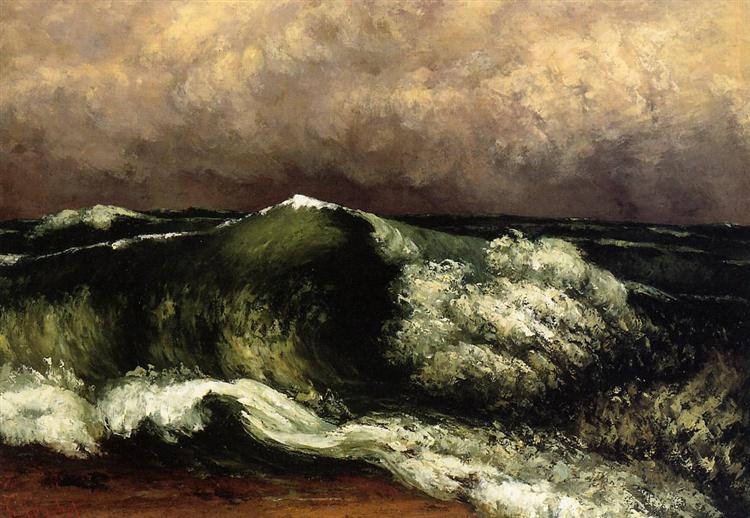
The Pacific here is not an expanse. It is a weight, a presence, a thing that has reached some formal agreement with the overcast and intends to honor it indefinitely. To look out from the rail is to study a landscape that has committed itself entirely to the muted register. Slate, charcoal, the particular dampened green of kelp forests moving in a cold, rhythmic amnesia. Everything here is designed to disappear. The sculpins, the rockfish, the lingcod, they move through the silt the way old thoughts move through an old mind, cloaked in the drab and mottled language of the stones, fluent in a grammar of erasure that took ten million years to perfect.
To exist in such a place is to accept a certain discipline. One learns to wear the fog as a man learns to wear a heavy coat, not with pleasure, but with the understanding that the alternative is worse. The gray is not oppressive. It is instructive. It teaches the eye to slow down, to stop expecting color where color has never been promised, to find in the shadow its own austere sufficiency.
But the sea is not interested in consistency. The sea has its own ideas.
When the lingcod came over the gunwale, he appeared at first to be nothing more than a continuation of the reef itself, scarred, armored, a veteran of the deep whose skin read like a topographic survey of granite and grit. He was a creature of the long wait, built for the pressure and the patience of cold water, and he looked it. The bruised afternoon light fell across him and found little to work with. He was the color of the bottom. He was the color of the overcast. He was, in every visible respect, exactly what this ocean had always insisted upon.
And then he opened his mouth.
The interior was turquoise. Not blue-green, not blue-gray, not any of the careful compromises the Pacific permits, but turquoise, absolute and unqualified, the color of a Caribbean afternoon held prisoner in a cold, salt-crusted lung. It was a trespass of the first order. It was the kind of color that arrives in a room and makes the room feel it has been waiting in error for everything that came before.
The biologists have a name for it. Biliverdin, a bile pigment, a quirk of chemistry, a metabolic accident that saturates the muscle and produces this effect in certain specimens. They offer the term the way a careful man offers an explanation he does not entirely believe, smoothing the strangeness with nomenclature, building a thin architecture of language between themselves and the shock of the unreal. It is understandable. It is human. And it is, in the end, insufficient.
Because a name is not an answer. A name is a door that, when opened, reveals only the fact of a longer corridor.
Consider what this fish has been carrying. Consider the specific labor of it, to move through thirty fathoms of cold and dark and the long, gray pressure of this particular sea, and to do so with that color sealed inside you, unseen, unwitnessed, burning in the dark of your own body like a lamp in an unvisited room. He was not advertising it. He was not performing it. He was simply in possession of an interior weather that bore no relation whatsoever to the conditions outside.
That is a form of honesty the surface cannot provide.
The gray, after all, is a consensus. The overcast is a social arrangement, a thing the sea and sky have worked out between them over a very long time, and most of what lives here has agreed to participate. The mottled skin, the drab flank, the slow passage through the silt, these are the terms of membership. The lingcod observes them. He wears the uniform. He keeps to the shadows and the reef and the long, unremarkable business of survival.
But he did not surrender the blue.
Whatever force or accident or ancient stubbornness of chemistry produced that color, it persisted. The pressure did not diminish it. The cold did not negotiate it into something more appropriate. It remained, through all the long, gray tenure of his life, a pigment that owed nothing to the mud or the overcast, a light that had never once been asked to justify itself against the prevailing conditions.
When the blade finally moves, the audacity of it stops the breath. The camouflage of a lifetime, and then this, wet, bright, unapologetically strange. A pigment that never learned the language of the fog.
Somewhere below, the reef resumes its patience. The silt settles back across the stones. The kelp counts time in its cold, rhythmic amnesia, and the ocean continues its long work, armored and deliberate, full of creatures carrying their impossible weather in the dark, waiting for no one, witnessed by nothing.
 Journal of Skvader
Leave a comment